PS6 “delay” is great for Switch
There has been a lot of talk about Sony not being in a rush to release the PS6. IGN reports:
“Sony expects the PS5 lifecycle to be longer than that of previous console generations,” [David] Gibson said, adding that this is likely to push the PS6 launch back beyond previous predictions. “There’s a high likelihood that the PS6 launch will occur after 2028.”
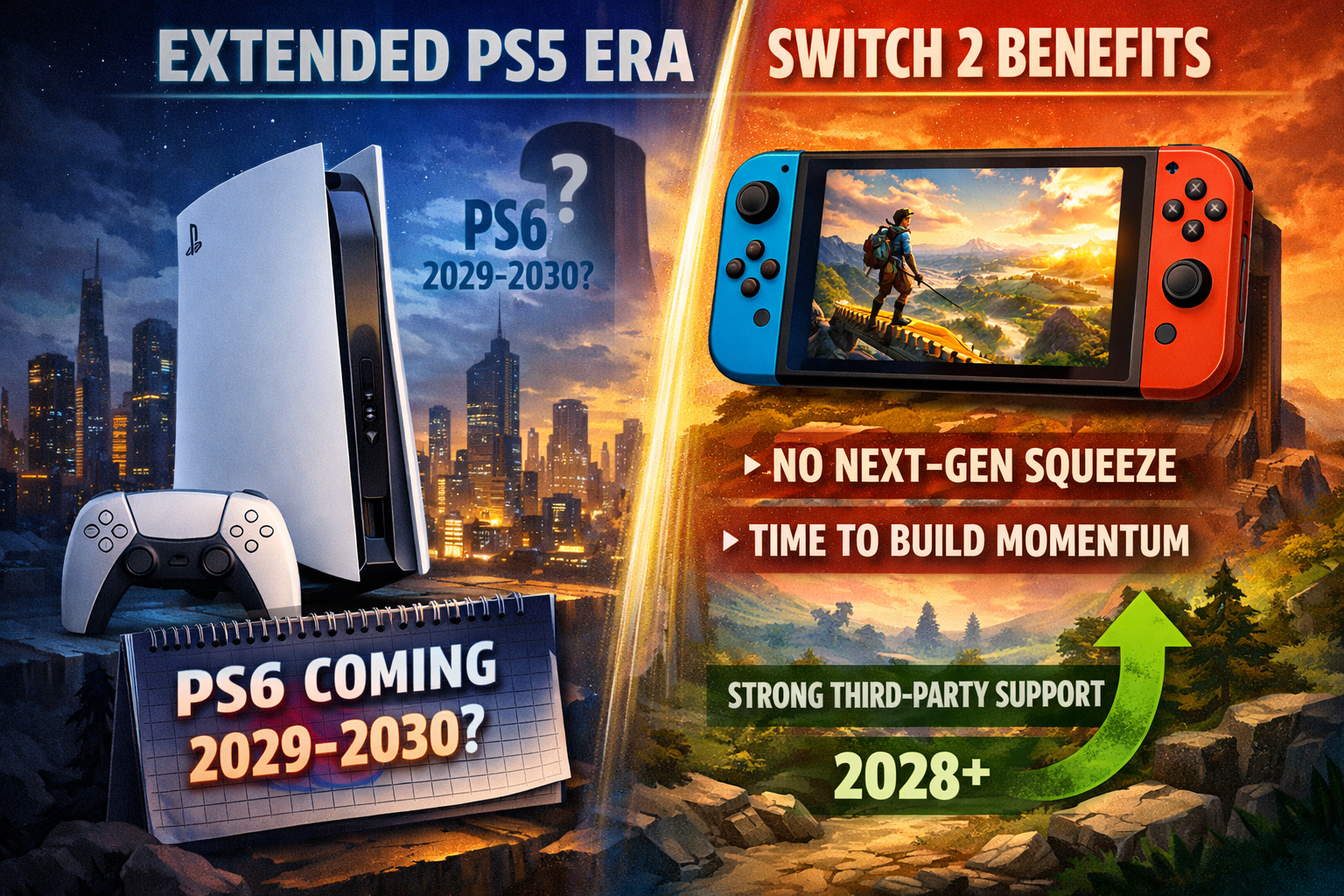
I think it would be a wise move for Sony to push the PS6 release out as close to 2030 as possible. This is also great for Switch 2.
For Sony’s specifically, the PS5 still hasn’t fully come into its own yet - and it’s been out for over five years already. Outside of a handful of showcase titles, this generation hasn’t really delivered the clear, generational leap that past PlayStation cycles did. A longer runway gives Sony time to build a stronger exclusive lineup, stabilize development pipelines, and actually extract full value from the hardware.
There’s also the matter of technological timing. Semiconductor costs remain elevated, and the kinds of meaningful upgrades consumers expect like advanced ray tracing, AI-assisted frame generation, significantly higher memory bandwidth, etc.; all benefit from process-node maturity. By waiting, Sony increases the odds that the PS6 launches with true generational leaps rather than incremental bumps. A delayed release also gives developers more time to fully exploit PS5 hardware before having to pivot again.
But here’s where this gets interesting for Nintendo.
If Sony holds the PS6 until 2029 or 2030, that essentially locks the industry into a longer PS5-era cycle. That stability REALLY benefits Switch 2 immensely. Instead of being forced into an early “mid-gen squeeze,” Nintendo gets multiple years where the PS5 and Xbox Series hardware remain the performance baseline for third-party games.
In other words: the Switch 2 doesn’t immediately look underpowered like Switch 1 did against the PS4 and XBONE.
A delayed PS6 also means fewer next-gen-only titles that would otherwise skip Nintendo hardware. It extends the window where cross-platform releases remain viable. That’s huge for a system that thrives on hybrid appeal and massive install base rather than raw power.
It also gives Switch 2 more time to build momentum. If it’s already pacing toward a 20-million-unit first fiscal year, imagine where it could be by 2028 with no true next-gen competitor disrupting the cycle. Developers follow install bases. If Nintendo continues to dominate in Japan and remain competitive globally, third parties won’t be able to ignore that no matter when the PS6 releases.
From a broader industry perspective, stretching the generation may actually be healthier. Development costs are ballooning and studios are needing longer tails to recoup investments. A longer PS5 cycle could reduce the pressure of constantly resetting the hardware race.
For Sony, this ‘delay’ should mean a stronger PS6 launch.
For Nintendo, it means breathing room and a longer runway.
TL;DR: The longer Sony waits on PS6, the better it is for Switch 2. A delayed PS6 gives Sony time to deliver a true generational leap and gives Switch 2 a longer window to thrive without being overshadowed by next-gen hardware.